
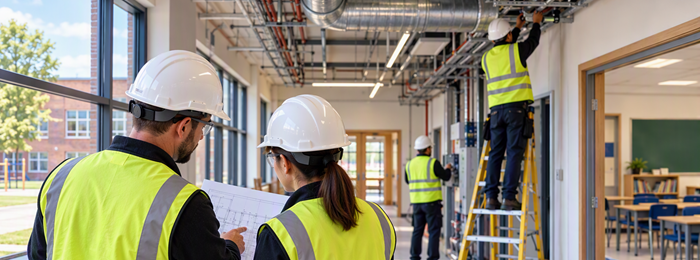
Education projects place exceptional demands on building services. Systems must support healthy, comfortable learning environments, meet demanding energy and compliance requirements, remain practical for estates teams to operate, and often be installed around live-school constraints. MEIS brings these priorities together through coordinated M&E delivery for new-build, refurbishment, modular and specialist education facilities across the UK.
MEIS translates education sector requirements into coordinated mechanical, electrical and public health installations that support comfort, indoor air quality, energy performance, accessibility, safety and reliable operation. By integrating building services with the wider project programme and the needs of each learning environment, we help clients deliver facilities that are practical to operate and equipped for long-term use.
This article examines the building services priorities shaping education projects and shows how MEIS applies its M&E delivery expertise across further education, mainstream schools and specialist learning environments.
Rebuilding Ageing School Estates in the UK
The biggest driver of change in schools is the School Rebuilding Programme. The programme was announced in June 2020 as part of a 10-year plan to improve the condition of school buildings across England. It aims to replace or refurbish 500 schools and sixth form colleges, prioritising those in the poorest condition to ensure safe, modern, and energy-efficient learning environments. The programme is part of the government’s broader strategy to “build back better,” supporting high-quality education and economic growth through construction and related industries. Started in 2021, the programme currently includes 524 school rebuilding and refurbishment projects. Schools are prioritised where buildings are in poor condition, present safety risks, or require major replacement.
Delivering the objectives of the School Rebuilding Programme requires M&E contractors to coordinate technical performance, programme, buildability and long-term operation. MEIS approaches education projects with the Department for Education’s priorities in view, including energy performance, operational efficiency, occupant wellbeing, safety, resilience and whole-life value. The principal building services considerations are:
1. Net-zero Carbon Buildings
For new school buildings, high sustainability performance depends on coordinated choices across the fabric and building services. Key considerations include net-zero operational carbon, thermal performance, renewable energy integration, heat-pump selection and lifecycle carbon and climate resilience, balanced against the project’s electrical capacity, spatial constraints, controls strategy and operational needs.
2. Heat Decarbonisation
Decarbonising heat involves more than replacing fossil fuel plant with air source heat pumps or other low carbon technologies. The M&E strategy must also address heat demand, electrical capacity, system temperatures, controls, acoustic impact, resilience and year round comfort so that the selected solution performs effectively in an occupied education environment.
3. Energy Efficient Ventilation
Ventilation strategies must maintain indoor air quality without creating excessive energy use, noise or draughts. Depending on the building, occupancy patterns and teaching spaces, this may require natural, mechanical or mixed mode ventilation supported by appropriate controls. Effective coordination is essential because air quality, thermal comfort, acoustics and energy performance directly affect pupils and staff.
4. Thermal Comfort
Maintaining appropriate temperatures throughout the year is a key requirement within school buildings. M&E engineers must balance heating, cooling and ventilation strategies to prevent overheating in summer and ensure comfort during colder months. Climate resilience is now an important consideration in school design.
5. Smart Building Controls & Long-term Operational Performance
A well-designed Building Management System, supported by appropriate metering and performance monitoring, enables estates teams to understand energy use, identify faults and optimise systems over time. Effective delivery depends on clear controls philosophies, accessible interfaces, sensible alarm strategies and commissioning that leaves school staff with systems they can operate confidently throughout the building’s lifecycle.
6. Electrical Infrastructure and Future Capacity
Electrical engineers must ensure schools have sufficient capacity for modern teaching technologies, digital learning, security systems, EV charging, renewable energy generation and future expansion. Reliable communications and IT infrastructure are also essential.
7. Whole Life Cost and Maintainability
Whole life value depends on selecting services that are robust, maintainable and energy efficient, with suitable access, controls, replaceable components and support arrangements. For education clients, this means balancing capital cost with energy use, maintenance demand, reliability and expected service life so that today’s installation does not create an avoidable operational burden.
8. Resilience and Building Condition Improvement
Many projects involve replacing ageing buildings with significant condition issues. M&E engineers help address risks associated with obsolete services infrastructure, poor energy performance, inadequate ventilation and failing plant equipment.
9. Building Safety and Compliance
Following high-profile concerns around building condition, there is continued investment in fire safety upgrades, emergency systems, accessibility improvements, structural remediation and mechanical and electrical upgrades. Condition led investment remains a major funding priority.
10. Modern Methods of Construction (MMC)
Offsite and modular construction can reduce programme duration, improve cost certainty and limit disruption during term time, but it demands early and disciplined M&E coordination. Services interfaces, plant space, penetrations, distribution routes, testing and commissioning must be resolved across factory and site activities so that modules connect efficiently and perform as intended when the building is assembled.
MEIS Education Sector Projects
From new school buildings and specialist learning facilities to major refurbishment programmes, MEIS plays a key role in delivering the building services infrastructure that underpins modern educational environments. The following projects highlight our contribution to education sector developments across the UK.
Together, these projects demonstrate MEIS’s ability to adapt M&E delivery to different education settings, stakeholder needs and construction methods.
Project 1: Leeds City College
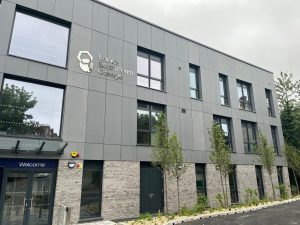
At Leeds City College’s Park Lane Campus, MEIS was appointed by McAvoy to deliver the complete Mechanical, Electrical and Plumbing installation for a new three-storey science block serving the Sport and Sixth Form Science departments. The varied accommodation included sports science laboratories, IT suites, teaching spaces, a massage room and associated facilities. This required coordinated building services suited to specialist and general teaching uses. Working closely with the wider project team, MEIS delivered the MEP package to programme, with handover completed in June 2025. Read more about the project.
Project 2: Imberhorne School, East Grinstead, West Sussex
Imberhorne School in East Grinstead is a secondary school for pupils aged 11–18, operating across two sites. Its Lower School at Windmill Lane serves Years 7 to 9 and currently accommodates 826 pupils. The site has significant condition and suitability issues, particularly its pupil toilets and modular teaching accommodation, which is more than 30 years old. Approval was therefore granted for a priority improvement scheme, creating an opportunity to replace ageing infrastructure and improve the suitability, resilience and performance of the learning environment.
MEIS was appointed to develop the complete mechanical and electrical design before progressing to the full installation and delivery of the M&E services. The project has now been successfully completed and handed over, with the new facility providing a modern learning environment for pupils and staff.
Project 3: The Milestone School, Gloucester
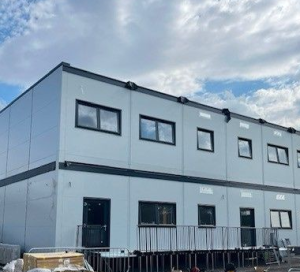
MEIS has been appointed by McAvoy Group to deliver comprehensive mechanical and electrical services for two new classroom buildings at The Milestone School in Gloucester, a specialist school supporting pupils with severe learning difficulties and a range of physical, sensory, medical and communication needs.
Building on our extensive experience in the education sector, the project further strengthens our expertise in specialist learning environments, where reliable, accessible and safe building services play a vital role in supporting both pupils and staff.
The new facilities will include accessible toilets, hygiene rooms, therapy spaces, storage areas and sports changing facilities. This requires careful integration of water services, drainage, ventilation, heating, electrical systems and specialist equipment within the overall building design.
The first building is nearing completion, with the second scheduled for handover by the end of the year.
Project 4: Hiltingbury Junior School, Hampshire
Hiltingbury Junior School, which educates 377 pupils aged 7 to 11, is developing a purpose-designed modular building to replace an existing unit and provide a dedicated Resourced Provision for up to 12 pupils with Social, Emotional and Mental Health needs. Scheduled to open in phases from spring 2027, the facility will combine modern teaching resources, IT infrastructure, dedicated outdoor space and safeguarding measures. For the M&E package, the project requires close integration of comfort, ventilation, lighting, power, data, controls and safety systems within a modular solution designed around a supportive specialist learning environment.
MEIS are currently delivering the full M&E design for this project which is nearing completion and will soon commence the M&E installation which is expected to start early in October 2026.
Project 5: The Promise School, West Devon
The Promise School in Okehampton, West Devon, was developed as a purpose-built specialist school providing 100 places for pupils with SEND, including those with autism and social, emotional and mental health (SEMH) needs. Completed in 2023, the £10.7m development introduced a range of specialist facilities including therapy rooms, hygiene rooms, calm spaces, food technology areas and covered outdoor learning environments, alongside sustainable features such as roof-mounted solar PV panels and heat recovery ventilation systems.
Following significant damage to the building in a fire earlier this year (February 2026), a new interim school facility is due to be delivered. The project will provide specialist teaching accommodation, sensory and nurture spaces, hygiene facilities, independent living areas and upgraded outdoor activity provision.
Following our appointment by McAvoy, MEIS are delivering the full MEP design/build and installation to this 2552sqm facility. Work is ongoing with an extremely aggressive programme to enable handover of a fully functional temporary school by January 2027.
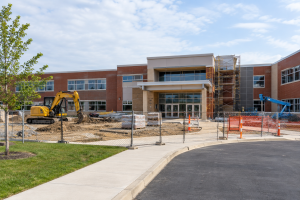
Across these projects, MEIS combines education-sector understanding with practical M&E delivery. From low-carbon systems, ventilation and controls to accessible specialist facilities and modular construction, our focus is on coordinated, maintainable building services that support the programme, perform reliably in use and contribute to better learning environments.
If you are planning a new-build, refurbishment or modular education project, speak to MEIS about the M&E requirements, delivery risks and opportunities at an early stage.